JoJo is Ōdō (王道)
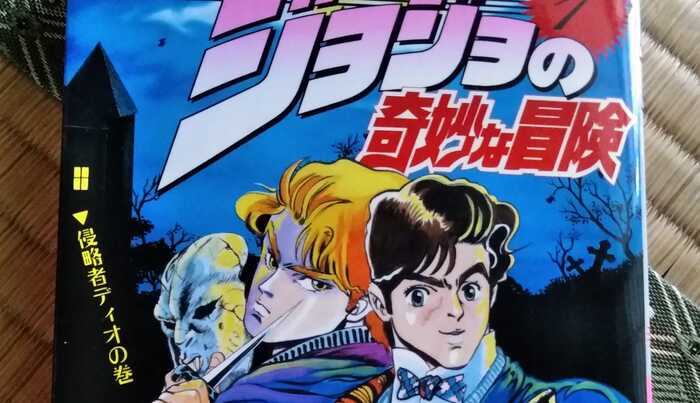
Araki Hirohiko(荒木飛呂彦), the creator of JoJo’s Bizarre Adventure, has stated1 that “JoJo is ōdō(王道).”When contemporary Japanese people use the word ōdō in everyday conversation, it often means “the standard” or “the classic.” Antonyms for ōdō might include “heterodox,” “unconventional,” or “experimental.” Indeed, many would likely feel that these antonyms are more fitting descriptions for a work like JoJo.
Why does this gap in the understanding of ōdō exist between the general public and the author, and what does it signify? This is what I wish to explore.
The Etymology of Ōdō and Its Evolution in Japan
Originally, ōdō emerged in China as a concept rooted in Confucian political philosophy, systematized by Mencius. It referred to an ideal form of governance in which the people are ruled by virtue and propriety rather than by military force or coercion.
However, as the concept was transmitted to Japan, its original political meaning gradually faded. Because ōdō is written with characters meaning “king” (王) and “road” or “way” (道), it eventually came to mean “the most correct path” or “the orthodox method.” By the 1980s, in subcultures such as manga, anime, and video games, the term had firmly taken root to describe “a straightforward approach without eccentricities” or “a standard narrative development that anyone can enjoy.”
This was also the era when battle manga like Fist of the North Star and Dragon Ball gained immense popularity, shaping the modern image of ōdō. These works depicted a hero archetype who confronts powerful enemies and ultimately emerges victorious. This is a traditional narrative form that has long been inherited within Japanese mass entertainment, with a lineage tracing back to Astro Boy, Ultraman, and even the pre-war kamishibai (paper theater) Golden Bat. Such stories functioned as more than mere entertainment; they served as a mechanism for sharing standards of good and evil and visions of a desirable society within the community. By repeatedly experiencing narratives where evil is judged and justice prevails, people naturally internalize a sense of security in order and a rejection of evil.
The narrative of justice defeating evil has been rooted in the Japanese consciousness for far longer. In the kōdan (講談: traditional oral storytelling) of Ōoka Echizen, which was popular in the Edo period, the protagonist corrects evil through judgment and restores disrupted order. The long-standing support for such stories is likely due in part to their affinity with the values of Japanese society, which emphasizes harmony and community. The ideal of “encouraging good and punishing evil” has crystallized into the idiom kanzen-chōaku(勧善懲悪), forming a part of the Japanese ethical sense. This straightforward structure of good and evil has been passed down across generations, serving to share and reaffirm the norms and ethics of the community.
The 1980s was also an era when Japan was heading toward an economic zenith fueled by the bubble economy. As an optimistic belief that economic growth would improve society took hold, material wealth and entertainment came to be valued over debates concerning political or ideological “correctness.” Within this historical context, the word ōdō further detached from its original connotations of ideals and ethics. A hero of justice trains tirelessly to grow stronger and defeats a colossal enemy. Then, an even stronger enemy appears, and the protagonist strives for even greater strength. Power levels escalate endlessly. This, indeed, was the ōdō of that era.
At the same time, this was also a period when narratives based on a simple structure of good and evil began to waver. This was perhaps a consequence of systems of order, disguised as justice, repeatedly committing acts that undermined public trust. Alternatively, it can be attributed to a growing universal recognition that the realities of the modern world—where differing values, cultures, and social systems collide—cannot be adequately captured by a simple dichotomy of good versus evil. In recent narrative works, there is a discernible trend toward themes that transcend conventional moral dualism, instead encouraging understanding and imagination regarding the justice and values of the opposing side.
Araki’s Ōdō
The serialization of JoJo began in 1987. As noted above, this was precisely when the ethical meaning of ōdō was fading from the public consciousness, and when doubts were emerging regarding the dichotomy of good and evil. Hirohiko Araki, however, refused to pander to public trends; instead, he continued his solitary exploration of the path that manga fundamentally ought to take—and it seems this is what he calls ōdō. While inheriting the traditional format of a battle between good and evil, it differs from the conventional narrative structure that simply eliminates evil to maintain a peaceful order. Nor does it, however, adopt the relativistic perspective so common in recent years.
In today’s society, characterized by diverse perspectives and standpoints, the portrayal that “there is justice on both sides of a conflict” has become the norm. While this can be seen as a maturation of ethical consciousness, it can also be said that we have lost absolute standards. Carelessly asserting “correctness” is now even perceived as a risk.
Amidst this, JoJo is a manga that explores an absolute truth unswayed by the historical context of its time. JoJo is a depiction of truth derived from Hirohiko Araki’s observation and intuition; it is an “ōdō manga” that earnestly grapples with the author’s internal questions. It does not begin with the predetermined message that “justice prevails” and then construct a story to serve that end. What exists there is the pursuit of reality, and as a consequence of that pursuit, justice prevails.
Of course, JoJo is fiction, and the impossible happens constantly. The sheer eccentricity of its imagination is a charm that drives the narrative forward, but if anything were allowed to happen, the story would collapse. What holds it together as a coherent narrative is its unwavering depiction of fundamentals, and that is what constitutes its reality. It is a universal truth that transcends the “correctness” prescribed by the “order” of any specific time or place, reaching the reader as a compelling message.
I wish to record here the truth that I have received from JoJo. A work like JoJo holds limitless depth, and what I can articulate is but a fraction of it; your JoJo is surely something else entirely. It is my hope that my JoJo might help expand your JoJo, even if only slightly. I welcome any thoughts, critiques, questions, or comments you might have.
“There is no manga more ōdō than this” — Why Hirohiko Araki continues to draw JoJo https://news.yahoo.co.jp/feature/1055/ ↩︎